 CENELEST
People
Team
The alliance is coordinated by researchers at UNSW Sydney and Fraunhofer ICT.

Dr. Chris Menictas
Associate Professor
UNSW Sydney
Chris Menictas has been actively involved in the energy efficiency sector for over 20 years. His research interests include: energy storage; flow battery and fuel cell systems; energy harvesting; temperature shifting devices for bio-medical applications, refrigeration and air conditioning efficiency optimisation; and thermal morphing. Dr.
Full profile
Menictas is Head of the Energy Storage and Refrigeration Research Group in the School of Mechanical and Manufacturing Engineering, UNSW Sydney Australia.
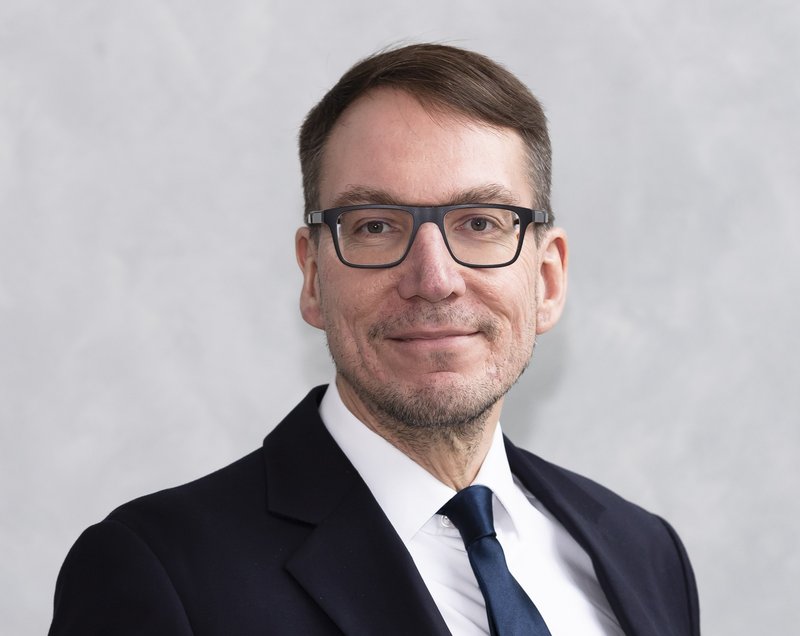
Dr.-Ing. Jens Noack
Adjunct Associate Professor, UNSW
Fraunhofer ICT
Dr.-Ing. Jens Noack is Team Manager for Flow Batteries at the Fraunhofer Institute for Chemical Technology ICT in Pfinztal, Germany. He works at the intersection of applied electrochemistry, energy-storage technology and research management. His career has been shaped by the question of how scientific ideas can become reliable technical solutions.
Full profile
He joined Fraunhofer ICT in 2007 as a project lead, scientist and engineer. Over the following years, he took on increasing responsibility within the institute’s flow-battery activities: first as Provisional Group Leader, then as Deputy Group Leader for Redox Flow Batteries, and since January 2025 as Team Manager for Flow Batteries. During this time, he has contributed to, coordinated or led more than forty publicly and industrially funded projects. His professional path began in Dresden, where he trained as a chemical and biological laboratory technician before studying Chemical Engineering and Environmental Technology at Dresden University of Applied Sciences. His diploma thesis, completed at the Leibniz Institute for Solid State and Materials Research Dresden in the Department of Applied Electrochemistry under the supervision of Prof. Dr. rer. nat. L. Dunsch and Prof. Dr. rer. nat. E. Herrmann of Dresden University of Applied Sciences, addressed the synthesis, isolation and characterisation of new endohedral trimetal nitride fullerides. Before moving fully into electrochemical energy storage, he also worked as a scientific assistant at the Technical University of Dresden. At Fraunhofer ICT, Jens Noack developed his scientific profile through projects that connected electrochemistry with practical energy-system challenges. A defining experience was his involvement in the Redox-Wind project between 2011 and 2019, which included the development and installation of one of Europe’s largest vanadium redox-flow-battery systems at the time. It demonstrated early on that successful energy-storage technology requires more than strong laboratory results: it needs sound engineering, dependable operation, interdisciplinary collaboration and a clear understanding of real application environments. He completed his doctoral degree at the Karlsruhe Institute of Technology. His dissertation addressed an energy-storage concept based on aqueous vanadium(II) salt solutions. Since March 2024, he has been pursuing his habilitation at the University of the Bundeswehr Munich. International collaboration is an important part of his work. Jens Noack has been Deputy Director of CENELEST, the German-Australian Alliance for Electrochemical Technologies for Storage of Renewable Energy, since 2019. He previously served as its German Project Lead and helped establish the alliance as a long-term platform for joint research, researcher exchange and collaboration between institutions in Germany and Australia. He is Adjunct Associate Professor at the University of New South Wales in Sydney and at The University of Queensland in Brisbane. Through these roles, he contributes to teaching, doctoral training and international research cooperation. He also lectures on electrochemical energy storage at the University of New South Wales and the University of the Bundeswehr Munich. Jens Noack currently coordinates two European Marie Skłodowska-Curie Doctoral Networks: PREDICTOR, focused on electrochemical high-throughput methods, and SPACER, focused on hierarchical electrode materials for flow batteries. The two networks bring together universities, research institutes and industrial partners across Europe, supporting the doctoral training of 34 early-career researchers in an international and interdisciplinary setting. Alongside research and education, he is strongly engaged in technology transfer and standardisation. Since 2014, he has chaired the German standardisation committee DKE K 371.0.6 “Flow Batteries”. He has also worked as an industrial consultant in redox-flow-battery technology since 2012. For him, standardisation is not an administrative add-on; it is part of creating technologies that can be compared, trusted, manufactured and deployed. His professional record includes peer-reviewed articles, technical and conference publications, patent applications, book chapters and the three-volume reference work Flow Batteries: From Fundamentals to Applications, published by Wiley-VCH in 2023 and co-edited with Christina Roth and Maria Skyllas-Kazacos. He is also a founding member of the Flow Battery Network Australia / New Zealand. Jens Noack’s work is guided by a practical view of scientific progress. Energy-storage technologies matter when they help make energy systems more resilient, flexible and sustainable. His aim is to connect rigorous research with the conditions needed for real implementation: strong partnerships, well-trained researchers, suitable standards and an understanding of the technical and societal context in which new technologies must perform.

Prof. Dr. Jens Tübke
Professor
Fraunhofer ICT
Prof. Tübke’s department “Applied Electrochemistry” at the Fraunhofer ICT has covered a wide range of topics, ranging from basic investigations and material developments to system behaviour, for over 25 years. The current research fields include, for example, the development and optimisation of various energy storage devices and converters for stationary, transportable and mobile applications, such as fuel cells, electrochemical syntheses (power-to-X), lithium-ion batteries, sodium-ion batteries, lithium-sulphur batteries, lithium-oxygen batteries,
Full profile
as well as vanadium redox flow batteries, vanadium-air redox flow batteries, hydrogen-bromine redox flow batteries, zinc-bromine redox flow batteries and organic redox flow batteries. This includes the development and investigation of the behaviour of catalysts for fuel cells and electrolysers, production and development of catalyst-coated membranes and membrane electrode assemblies, thermoplastic electrode materials, electrolytes for redox flow batteries, new active materials, modelling and simulation of thermal, electrochemical, electrical and economical behaviour of cells, cell stacks and systems, thermal designs, cell and cell stack developments, system developments and analyses, as well as safety tests.

Prof. Dr. Maria Skyllas-Kazacos AM
Emeritus Professor
UNSW Sydney
Maria Skyllas-Kazacos AM is an Emeritus Professor in Chemical Engineering at UNSW Sydney Australia. She is one of the original inventors of the All-Vanadium Redox Flow Battery and holds more than 30 patents relating to the technology. She is a Fellow of the Australian Academy of Technological Sciences and Engineering and has received several awards including Member of the Order of Australia, the CHEMECA Medal and the Castner Medal.
Advisory Board
The Advisory Board supports CENELEST with industrial and scientific expertise.

Vincent Algar
Geologist
CENELEST Advisory Board
Mr Vincent Algar is a geologist by profession with over 27 years’ experience in the mining industry, spanning underground and open cut mining operations, greenfields exploration, project development and mining services in Western Australia and Southern Africa. Since 2015 Mr Algar has been Managing Director of Australian Vanadium Ltd (ASX: AVL) and is responsible for advancing the company’s high-grade Australian Vanadium Project in Western Australia.
Full profile
Mr Algar was instrumental in the launch of VSUN Energy as a subsidiary of AVL to develop a vertical integration strategy to incorporate energy storage markets through the growth in uptake of the vanadium redox flow battery.

Nathan Coad
Advisory Board Member
Nathan Coad has over 15 years of experience with the development, manufacture and integration of electrochemical energy storage products. This includes; Zinc Bromide flow & gel batteries, Hydrogen fuel cells and various Lithium-Ion battery chemistries. Nathan has an academic background in Mechanical Engineering and Energy Physics.
Full profile
Nathan started his career as an oil & gas engineer before retraining in Energy Physics and working as a Fuel Cell Test Engineer within Murdoch University (Western Australia). He then spent 10 years with Zinc Bromine Battery (ZBB) Energy Corporation in Australia and America as a Product Development Manager. During this role Nathan led the design, development and commercialisation of new flow battery technologies and related power electronics products. Following this, he developed, integrated and installed industrial Lithium-Ion energy storage systems for power utility and C&I clients. Since 2017 Nathan has been the Chief Technology Officer at Gelion, a spin-off from the University of Sydney, developing new battery chemistries and products. Gelion’s primary focus is gelated Zinc Bromide batteries for energy shifting.

Anthony Price
Director, Swanbarton Limited
CENELEST Advisory Board
He founded Swanbarton in 2003, using his knowledge of a broad range of storage technologies and understanding of the commercial framework for applying energy storage to power systems to develop a company which can offer services to developers of energy storage products, systems and services.
Full profile
Swanbarton helps clients from the battery industry develop and market their products for the emerging stationary battery energy storage market. He has been personally involved in the initiation and development of several large-scale battery projects.

Prof. Dr.-Ing. Christina Roth
Chair of Electrochemical Process Engineering
University of Bayreuth
Christina Roth is a trained materials scientist and the Chair of Electrochemical Process Engineering. Having obtained her academic degrees from the Technical University of Darmstadt and after a post-doctoral stay at Liverpool University, UK, she began her career as junior group leader at the Karlsruhe Institute of Technology (KIT).
Full profile
In 2012, she became professor at the Freie Universität Berlin, before taking up her present appointment at the Faculty of Engineering Sciences at the University of Bayreuth in 2019.